Milwaukee, WI – Eagle Technology, Inc. a leader in Facility Management and Computerized Maintenance Management Software (CMMS), has announced full integration with, Esri’s ArcGIS (Geographic Information System) software for location intelligence. ArcGIS is widely used by municipalities, airports, oil and gas industries as well as multinational corporations. It is designed for collecting, managing, evaluating, and storing geographical asset data.

Numerous benefits accompany the implementation of Proteus MMX with GIS for facility management, such as finding assets, capturing data, and tracking patterns in your data so you can make better decisions and take action. As this integrated product brings together information from across the organization, businesses can expect to improve coordination and operational efficiency.

Proteus MMX with ArcGIS integration is equipped with contextual tools that give the user greater insights by effectively visualizing where maintenance needs to occur. A light on a runway, a telephone pole, a generator in the yard, knowing where and what has to be done in maintaining equipment. Users can seamlessly collaborate with their maintenance crews and share critical data via maps, apps, dashboards, and reports.

ArcGIS Work Orders on Assets

With a GIS it is possible to identify all the elements that need to be modified and to foresee the frequency of the intervention’s optimization and improvement in each of them. Proteus MMX will also manage, capture, and track inspection, maintenance, and repair activities for cost containment, and risk reduction.

“ArcGIS integration with Proteus MMX opens our world-class solution to more users, such as airports, roadways, and government facilities, on a global basis, as it maps, captures and analyzes geographical data.” – Harry Kohal, Vice President of Business Development at Eagle Technology, Inc.

Eagle also recently added an Electronic Call Log feature to assist airports in streamlined reporting for Federal Aviation Administration (FAA).  The Electronic Call Log is located within the cloud-hosted Computerized Maintenance Management Software which eliminates traditional problems associated with lost or damaged logbooks.  Several reports and Key Performance Indicators (KPI’s) are readily available for FAA Inspection.

 Screenshot of an Electronic Call Log on Proteus MMX

About Eagle Technology, Inc.


Eagle Technology, Inc. is a software company of a cloud-hosted Next-Gen Computerized Maintenance management solution called Proteus MMX, offering all the features of a traditional solution, preventive maintenance scheduling, work orders, and asset management combined with the latest digital trends as Enterprise Resource Planning (ERP), Artificial Intelligence Integration, and IoT system connectivity.

Market Highlights

The Real-Time Location Systems Market has been segmented based on type and application. The type segment has been further segmented as radio frequency identification (RFID), Wi-Fi, ultrasound, infrared, and ZigBee (Bluetooth Low Energy). RFID accounts for the largest market share, by type, with 46.5% in 2018 and is projected to register a CAGR of 26.7% during the forecast period. Furthermore, the applications segment has been segmented as healthcare, government and defense, transportation & logistics, industrial manufacturing, and retail. The healthcare industry holds the largest market due to high demand of the systems for tracking and monitoring devices and individuals.

The increasing demand for RTLS in the healthcare industry is considered as a major factor for driving the market. RTLS has shown potential to transform hospital processes such as asset temperature monitoring, bed capacity management, patient/provider workflow, patient elopement, security, and other location-dependent applications. RTLS enables a more accurate assessment of the exact number, location, and functionality of medical devices which has enabled hospitals to focus on improving patient care and reduce capital expenses. These systems also identify and manage inefficient use of human resources. Moreover, the increasing demand for RTLS due to Industry 4.0 is another factor that drives the market growth. Industrial processes are increasingly getting automated due to the rapid development of technologies including IoT, artificial intelligence (AI), machine learning, and virtual reality. There is a rise in demand for asset tracking solutions such as RTLS in manufacturing due to the benefits it has offered in terms of providing full visibility of assets, processes, resources, and products.

Request a Free Sample @ https://www.marketresearchfuture.com/sample_request/1830

Prominent Players

Some of the Prominent Players in the global real-time location system (RTLS) market are IBM Corporation, Zebra Technologies Corporation, STANLEY Healthcare, General Electric Company, Siemens AG, Airista Flow, Inc., Sonitor Technologies Inc., RF Technologies, Inc., IDENTEC SOLUTIONS, PLUS Location Systems USA, LLC, PINC Solutions, Radianse, Essensium, CenTrak, and TeleTracking Technologies, Inc.

According to Market Research Future analysis, the global real-time location system (RTLS) market has reached USD 1.875 billion in 2018 and has been estimated to be valued at USD 23.9042 billion by 2028 at 28.7 % CAGR during the forecast period 2019–2028.

The MRFR analysis offers a comprehensive understanding of market dynamics. The global real-time location system (RTLS) market is analyzed across key geographies, namely North America, Europe, Asia-Pacific, and the rest of the world. The media and entertainment market in North America is expanding due to the presence of key market players and their investments in countries including the US and Canada.

The global real-time location system (RTLS) market has been segmented on the basis of type, application, sales channel and region. The global real-time location system (RTLS) market, by type, has been segmented into RFID, Wi-Fi, ultrasound, infrared, and ZigBee.

The RFID segment accounted for the largest market share of USD 872.5 million in 2018 and is expected to register a CAGR of 26.7% during the forecast period. The ultrasound segment is expected to register the highest CAGR of 31.0% during the forecast period.

By application, the global real-time location system market has been segmented into healthcare, transportation and logistics, industrial manufacturing, government & defense, and retail.

The healthcare sector offers a large number of applications for real-time location systems. Hospitals and clinics make use of this technology for tracking, monitoring, and managing assets such as medical equipment through real-time access to location data and status of equipment. RTLS helps hospitals reduce inventory costs, reduce the time taken by nurses, technicians and other healthcare professionals to locate missing equipment, reduce the number of thefts of expensive medical equipment, and automate the maintenance process. The healthcare segment accounted for the largest market share of USD 1.1252 billion in 2018 and is expected to register a CAGR of 26.8% during the forecast period. The industrial manufacturing segment is expected to register the highest CAGR of 31.9% during the forecast period.

The study was conducted using an objective combination of primary and secondary information including inputs from key participants in the industry. The report contains a comprehensive market and vendor landscape in addition to a SWOT analysis of the key vendors.


Access Report Details @ https://www.marketresearchfuture.com/reports/real-time-location-system-market-8046


About Market Research Future:

At Market Research Future (MRFR), we enable our clients to unravel the complexity of various industries through our Cooked Research Report (CRR), Half-Cooked Research Reports (HCRR), Raw Research Reports (3R), Continuous-Feed Research (CFR), and Market Research & Consulting Services.

MRFR team have supreme objective to provide the optimum quality market research and intelligence services to our clients. Our market research studies by Solutions, Application, Logistics and market players for global, regional, and country level market segments, enable our clients to see more, know more, and do more, which help to answer all their most important questions.


Contact

Market Research Future

Office No. 528, Amanora Chambers

Magarpatta Road, Hadapsar,

Pune – 411028

Maharashtra, India

+1 646 845 9312

Email: This email address is being protected from spambots. You need JavaScript enabled to view it.

Edge compute systems need compact programmable devices with low power consumption and a small enough thermal footprint to eliminate fans and other heat mitigation while providing robust compute horsepower. Microchip Technology Inc. (Nasdaq: MCHP) has solved this challenge by cutting static power consumption for its mid-bandwidth Field Programmable Gate Arrays (FPGAs) and FPGA System-on-Chip (SoC) devices in half and giving them the smallest thermal footprint and best performance and compute horsepower compared to all alternative devices in their class.

“Our new PolarFire FPGAs and FPGA SoCs reduce our customers’ system costs while enabling them to solve difficult thermal management challenges without having to forfeit bandwidth,” said Bruce Weyer, vice president of Microchip’s FPGA business unit. “The award-winning PolarFire FPGA platform already delivered the industry’s best combination of power and performance, and now we have reduced power consumption by up to 50 percent or more with the introduction of lower density offerings, while maintaining best-in-class capabilities on these platforms. No other offering in this class can match these capabilities.”

With their ultra-low power consumption, Microchip’s latest low-density PolarFire FPGAs (MPF050T) and PolarFire SoC (MPFS025T) additions exceed the performance/power metrics of any low-density FPGA or SoC FPGA alternatives in the market, with fast FPGA fabric and signal processing capabilities, the most capable transceivers and the industry’s only hardened application class RISC-V® architecture-based processor complex with 2 megabytes (MB) of L2 cache and Low-Power DDR4 (LPDDR4) memory support. Extending the portfolio with a 25K logic elements multi-core RISC-V SoC and a 50K logic elements FPGA opens new application possibilities. They are ideal for low-power smart embedded vision applications and thermally constrained automotive, industrial automation, communications, defense and IoT systems where neither power nor performance can be compromised.

The new PolarFire devices are complemented by a suite of Microchip devices for complete systems solutions for applications including smart embedded vision, machine learning, security, aerospace and defense, and embedded compute. They also provide plug-and-play solutions for power and timing designs. Lead customers are using the PolarFire devices to solve a variety of design challenges.

“As one of the world’s major suppliers of video converter hardware and software, we are always striving to meet demanding market requirements as we work with our customers to enable exciting new use cases,” said Nick Ma, CEO and CTO at Magewell. “Microchip’s PolarFire FPGA solution expands our opportunities to innovate with our USB 3.2 video capture product line. It offers ideal dimensions, industry-low power consumption and a unique combination of mid-range transceivers, logic, DSP and RAM resources.”

“Xenics is a pioneer in infrared imaging technology with a 20-year legacy of delivering a best-in-class portfolio of short-wave, mid-wave and long-wave infrared imagers, cores and cameras. SWaP (Size, Weight and Power) are extremely important considerations while designing a thermal imaging system,” said Frederic Aubrun, CCO of Xenics. “These are key differentiating capabilities for our customers. Microchip’s SmartFusion 2® and PolarFire FPGAs provide us the best balance between small form factor, power efficiency and processing resources required to support embedded algorithms like shutter-less compensation and image enhancement within an extremely low power budget in our current and next-generation product portfolios.”

“Kaya Instruments prides itself in designing industrial-grade, small-form-factor, low-power cameras that are capable of providing the best quality video under most challenging and severe conditions,” said Michael Yamposkly, Founder and CEO of Kaya Instruments. “The PolarFire FPGA-based Iron cameras utilize the FPGA’s small form factor and low-power performance to offer a compact outline that can be fitted into tight spaces while presenting the magnificent quality of the most advanced global-shutter CMOS sensor with excellent low-light performance.”


Availability

Developers can begin designing with Microchip’s PolarFire FPGAs and FPGA SoCs now using the company’s recently released Libero® 2021.2 software tools, which are available on the company’s website. Volume shipment of production silicon is scheduled for the first calendar quarter of 2022. Complete product information is available here.


Resources

Application Image: www.flickr.com/photos/microchiptechnology/51339717174/sizes/l/


About Microchip Technology

Microchip Technology Inc. is a leading provider of smart, connected and secure embedded control solutions. Its easy-to-use development tools and comprehensive product portfolio enable customers to create optimal designs which reduce risk while lowering total system cost and time to market. The company’s solutions serve more than 120,000 customers across the industrial, automotive, consumer, aerospace and defense, communications and computing markets. Headquartered in Chandler, Arizona, Microchip offers outstanding technical support along with dependable delivery and quality. For more information, visit the Microchip website at www.microchip.com.

PLEASANTON, Calif.Aug. 12, 2021 /PRNewswire/ -- CloudFabrix, a leader in AIOps solutions, is pleased to announce a new strategic partnership with Verge.io, a leader in Software Defined Datacenter solutions.

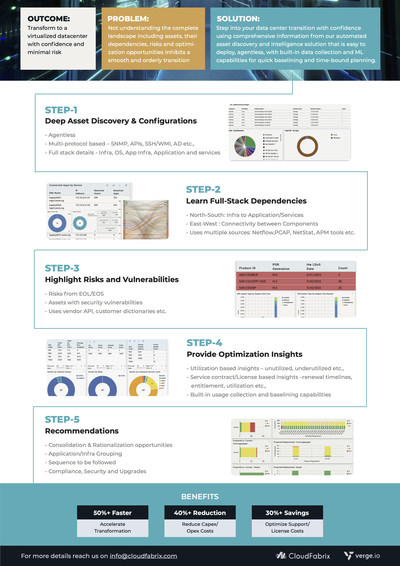
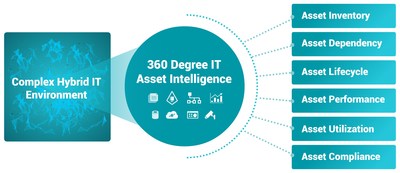
This partnership will combine CloudFabrix AI-based Asset Intelligence & Operations with Verge.io data center virtualization operating system to provide a complete data center transformation for enterprise and channel service provider (CSP) organizations. With full data center virtualization and the intelligence around all IT assets including network, compute, storage, and applications, once-siloed infrastructure assets become fully utilized with minimal effort while avoiding unnecessary infrastructure costs.

Verge.io brings complete data center virtualization and transformation to the forefront of MSP/CSP and enterprise organizations while complementing the CloudFabrix value of reducing complexity and creating operational excellence for clients. This combination of technologies helps organizations avoid the ever-present Supply Chain constraints and security issues.

At the core of this partnership and technology integration is CloudFabrix' newest Robotic Data Automation (RDA) platform that powers AI/ML tasks, advanced analytics and end-to-end digital IT automation. RDA takes a unique approach of using data bots and low-code pipelines that enable automated data preparation, data integration, data sharing and hyper automation across IT functions like AIOps, Observability, ITSM and DevOps/SRE.

"Never before has the combination of AI-based Asset Intelligence and a data center virtualization operating system been used to assure a successful data center transformation," said Bhaskar Krishnamsetty, Chief Product Officer at CloudFabrix. "We're incredibly excited to work with Verge, who's well known for pioneering the Software Defined Data Center space, to facilitate the smooth transition to a Verge.io virtualized data center with minimal risk for our clients."

"We're thrilled to assist CloudFabrix with taking the guesswork out of the digital transformation process and reducing risk through the VergeOS platform," said Matt Wenzler, CEO at Verge. "This strategic partnership will help organizations realize operational efficiency, cost savings, and a high ROI and I look forward to working with CloudFabrix for many years to come."

CloudFabrix brings Asset Intelligence, Operational Intelligence, Open Observability and Robotic Data Automation (RDA) together in a synergistic platform for Enterprises, MSPs/CSPs, government agencies and Service Providers.

Join the CFX and Verge.io teams for an informative webinar on August 25, 2021 by registering at https://www.eventbrite.com/e/get-more-outta-what-ya-got-tickets-165043767351

About CloudFabrix
CloudFabrix is the provider of the AIOps and Observability platform that scales and accelerates digital IT lifecycle planning and autonomous IT operations. CloudFabrix empowers IT leaders and operations personnel with AI-powered actionable intelligence to make faster and better decisions. For more information, visit www.cloudfabrix.com https://roboticdata.ai/

About Verge.io
Verge.io is a software-defined data center (SDDC) company located in the Greater Detroit, MI area. Its SDDC operating system, Verge-OS, is the first and only single operating system to offer a fully integrated cloud software stack used to build, deploy and manage virtual data centers. For more information, visit www.verge.io

Contact:
Tejo Prayaga
408-786-4089
This email address is being protected from spambots. You need JavaScript enabled to view it.

SOURCE CloudFabrix Software, Inc.

Fashinza, a global B2B manufacturing marketplace, announced today that they have raised $20 million in a mix of equity and debt as part of Series-A Funding. The round was co-led by marquee existing investors Accel Partners and Elevation Capital along with Abu Dhabi’s DisruptAD, Stride Ventures, Alteria Capital, and Tradecred. The round also saw the participation of Anand S Ahuja (MD, Shahi Exports & Founder, Bhaane) and actress Sonam Kapoor Ahuja, both of whom are vocal supporters of sustainable fashion. The funds will be utilized to invest in supply-chain technology and expand the company’s presence and manufacturers' base globally, especially in the US and the Middle East. Previously, in 2020, Fashinza had raised $2.6 mn from Accel and Elevation as a part of its seed round. 

Team Fashinza is on a mission to create sustainable and futuristic supply chains for fashion brands while improving the lives of workers. They connect family-run small/mid-sized audited factories to the cloud with their mobile-based production management and visibility software. In May 2021, the company expanded its operations to New York with the aim of reinventing the $800 bn global fashion manufacturing for the e-commerce era, which is more agile, fast, transparent, and sustainable. Their platform provides end-to-end online ordering for brands, complete production tracking from the factory floor, low MOQs, and fast but ethical production. For an industry addicted to low cost and overproduction, this could be a way to reduce wastage and its impact on the environment. In addition, they are solving critical problems of working capital and payment trust with embedded financing solutions like Net 60 payment terms. 

They are currently present in 10 countries and have partnered with brands from the US, Canada, UK, Middle East, and India. At present, they're associated with 150+ leading brands including Forever 21, Hummel, Centrix Brands, and Amaro. Post pandemic, brands have been scrambling to diversify their supply chains, find new suppliers, and reduce their dependence on a single source. Multiple brands have used Fashinza to diversify their supply chains across countries like China, Bangladesh, Sri Lanka, Vietnam,and India. 

Commenting on the fresh funding, Pawan Gupta, CEO & Co-Founder, Fashinza, said, “Fashinza has grown over 20x in the last 12 months. Covid has ceased travel and complicated the global apparel supply chain. Our AI-led technology platform automates everything from finding the right supplier to managing production across stakeholders. We started Fashinza because we wanted to help small and medium ethical factories employing millions of workers, connect with global demand and eliminate environmentally unsustainable practices of this industry like overproduction. By 2030, we want to build an environmentally net positive supply chain at a scale that doesn’t even cost extra.” 


Abhishek Sharma, COO, and Co-Founder, Fashinza, added, “Apart from the core offerings, we are also solving credit for fashion brands and suppliers in cross-border transactions through our Buy Now Pay Later program where we offer Net 30/Net 60 payment terms for buyers. We solve working capital challenges for suppliers through an embedded fintech ecosystem that operates on our core supply chain technology and data. This allows the supply chain to operate ethically and ensure workers get paid fairly and timely.” 


In his comments,Pratik Agarwal, Principal, Accel Partners, said,“At Accel, we’re delighted to deepen our commitment and relationship with the Fashinza team. We’re inspired by their electric execution against their vision to help fashion brands adapt to the e-commerce era with Fashinza’s agile manufacturing capabilities. We also admire Abhishek’s and Pawan’s priority to build a strong leadership team very early on. The early success Fashinza has achieved serving global brands validates the massive opportunity they’re going after. We’re confident Fashinzacan serve as a role model for more Indian startups building for the world from the get-go. We’re grateful for this partnership and super excited for the future! 


According to Akarsh Shrivastava, Vice President, Elevation Capital“COVID-19 has further underscored the need for agility and responsiveness for brands. Over the past year, Fashinza has been able to design and deliver an offering that addresses multiple issues in the supply chain, thereby alleviating this need for their brand customers and supplier base. Growth and customer satisfaction have only strengthened our belief in the opportunity. It has been a pleasure and privilege to work with Pawan, Abhishek and the rockstar Fashinza team as they disrupt this $600 bn opportunity. Super thrilled to deepen our commitment and relationship with Fashinza. 

More Articles ...